CCTV software products








CCTV software applications

Carrefour Brazil is one of the largest retail groups in Brazil and Latin America, operating more than 1,000 stores and serving a high volume of customers every day. Its Pamplona store in São Paulo, for example, located in one of the city’s busiest areas, greatly reflects the operational complexity faced by modern retailers: maintaining safety, reducing losses, improving efficiency, and delivering a better shopping experience at scale. Limited real-time visibility Challenges - Carrefour needed to address several key pain points. Manual processes and disconnected systems created risks of inaccurate alarms and inconsistent service. High customer traffic increased exposure to theft, fraud, and checkout losses, while traditional investigation methods made incident tracing slow and inefficient. At the same time, limited real-time visibility into customer flow, queues, inventory, and in-store behaviour made it difficult to optimize staffing, replenishment, store layout, and checkout efficiency. Unified retail ecosystem Solutions - To meet these needs, Dahua provided an integrated smart retail solution combining video surveillance, AI analytics, alarm linkage, customer flow analysis, and digital in-store technologies. The solution was built around Dahua’s DSS PRO platform, Retail Loss Prevention IVD/IVSS, Retail NVR, AcuPick intelligent search, people-counting cameras, Electronic Article Surveillance (EAS) integration, alarm host, access control, electronic shelf labels, and digital signage. These systems work together to connect security, operations, and customer engagement within a unified retail ecosystem. Integration of video surveillance For loss prevention, Dahua’s video analytics can detect suspicious behaviors such as item concealment and issue real-time alerts to security staff. Integration with EAS and intrusion alarms provides immediate contextual information for each alarm, helping teams respond faster and more accurately. High-value merchandise is further protected with anti-theft tags, while restricted storage areas are secured through access control. In the event of an incident, AcuPick and intelligent video analysis can be used to track the movement paths of customers or employees, significantly reducing investigation time. The solution is also projected to checkout and self-checkout security. Cart analysis can help to identify unscanned items, while intelligent barriers at self-checkout stations prevent customers from exiting before completing payment. Looking ahead, the integration of video surveillance with transaction data can further support automated sales auditing, discrepancy detection, and faster resolution of operational variances. Data-driven store operations Beyond security, Dahua’s smart retail technologies support data-driven store operations. People-counting cameras, customer flow analysis, queue monitoring, and heatmap analysis provide Carrefour with insights into occupancy, peak hours, movement patterns, high-traffic areas, and dwell time. This can help to optimize staff scheduling, product placement, promotional planning, and checkout lane management. Shelf replenishment monitoring enable detection of low stock or abnormal product removal and triggers real-time alerts, helping prevent lost sales and improving product availability. Dahua also enhanced the in-store customer experience through electronic shelf labels and digital signage. Electronic shelf labels enable automatic price updates, reduce manual errors, and support promotional communication. Digital signage and point-of-sale displays provide product information, strengthen brand presence, and create a more interactive shopping environment. Interactive shopping environment Results - As a result, Carrefour Brazil now operates in a safer, more efficient, and more connected retail environment. The project improves operational visibility, strengthens loss prevention, accelerates incident analysis, supports better staffing and merchandising decisions, and enhances the customer journey from entrance to checkout. Through this collaboration, Dahua helped Carrefour transform traditional store management into an intelligent retail model powered by integrated security, analytics, and digital engagement.

In the fast-evolving landscape of intelligent manufacturing, Dahua Technology is shaping a new benchmark with its advanced innovation capabilities and efficient production models, creating a fully digitalised and automated smart manufacturing system. Dahua AIoT Industrial Park From being recognised with China’s “National Worker Pioneer” award last year to being named one of the country’s first “Excellence-level Smart Factories” this year, the Dahua AIoT Industrial Park has made great strides in transforming its production. The factory features key innovations, such as automated assembly, unmanned testing, visualised supervision, and autonomous logistics. It fully integrates people, machines, materials, methods, and environment to deliver an exceptional user experience to customers worldwide. A model of human-machine collaboration Dahua has created a highly adaptive and collaborative smart manufacturing model By combining intelligent material management, automated assembly and testing, flexible production lines, an AIoT digital system, and digital twin technology, Dahua has created a highly adaptive and collaborative smart manufacturing model. The factory’s flexible production lines are designed for agility — capable of seamlessly switching between tasks at the push of a button, handling precision electronic components and complex structural parts alike. This flexibility is made possible by the deep integration of advanced automation and intelligent equipment in key production processes: Automated Screw Fastening: Equipped with visual positioning and real-time inspection modules for precise fastening and risk prevention. Airtightness Testing: AI-powered testing in collaboration with robotic arms for fully automated operation. Precision Dispensing: Visually guided dispensing combined with real-time quality inspection. Real-time digital twin operations The factory operates 24/7, continuously capturing data from all equipment and production processes With digital twin technology, the factory operates 24/7, continuously capturing data from all equipment and production processes. It creates accurate 1:1 digital models of production lines, robots, and machinery, using real-time data to simulate production flows, monitor line status, and predict potential issues. Even during non-operating hours, smart inspections for environment, perimeter, and fire safety run automatically, with instant alerts for any anomalies. Through the operations centre, managers can access live data and make informed decisions to drive efficiency and reduce costs. Unmanned testing & quality management Dahua enhances product quality through granular market insights, modular R&D design, and intelligent testing systems. Leveraging PLM (Product Lifecycle Management), testing parameters are auto-calibrated, while a big-data-driven “Smart Test Brain” continuously fine-tunes test strategies in real time. Dahua enhances product quality via granular market insights and design. Testing processes for mature products are streamlined, while defect predictions automatically trigger stricter testing standards, ensuring fast, high-quality output. For end-to-end quality control, every product is tracked using a unique QR code, enabling instant traceability across its entire lifecycle. This system builds a comprehensive quality data pool that supports production optimisation and quality strategy adjustments. Autonomous logistics for high-efficiency operations Dahua's smart warehouse combines vertical storage systems with a network of AGVs Dahua’s smart warehouse combines vertical storage systems with a network of AGVs, intelligent conveyor lines, robotic arms, vision systems, and automated labelling equipment, all managed via a digital platform to enable fully unmanned “lights-out” factory operations. During the inbound processes, products are automatically scanned, measured, packaged, and assigned by the Warehouse Control System (WCS), with robotic arms and AGVs handling storage placement. Outbound processes are fully automated as well — whether for full pallets, single-SKU shipments, or mixed-SKU orders — and completed within 10 minutes through coordinated efforts of AGVs, robotic arms, and conveyor lines. Looking ahead From “Pioneer” to “Excellence,” the Dahua AIoT Industrial Park is achieving new levels of production efficiency, product quality, and operational synergy through the deep integration of IT and OT technologies. Moving forward, Dahua will continue driving innovation and contributing to new-generation productivity, helping industries worldwide benefit from intelligent manufacturing and creating a smarter future for all.
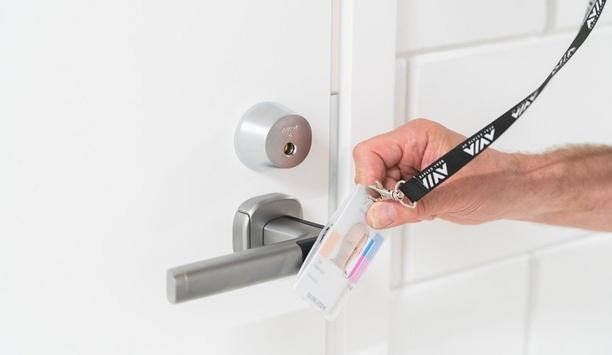
Managing access to and around Helsinki Airport is a complex task. Around 15,000 people work there daily pre-pandemic passenger numbers hovered around 60,000 to 70,000. Challenges faced Only authorised people should have access to many areas at an airport. The management of movement — by passengers, staff, and contractors— is critical to Finavia’s mission to deliver an efficient service. They sought new access solutions to help. Finavia staff and customer safety is paramount. In addition, every new access control device must: Facilitate the move to keyless security at the airport, which aims to enhance user convenience. Offer compatibility so Finavia can secure all types of openings, from doors and cabinets to fences and cargo. Integrate seamlessly with the existing access control system and software used at Helsinki Airport. Meet essential requirements for securing such a sensitive site: safety, functionality, durability and usability. Solution With Aperio H100 battery-powered handles, all types of airport doors are connected Partnering with ASSA ABLOY gave Finavia a vast choice of solutions to meet its complex security needs. With Aperio H100 battery-powered handles, all types of airport doors are connected to their access control system. This Aperio solution with inbuilt RFID capability was easy to install without the cabling that traditional devices require. “We see in real-time who will open the lock and when, and we can modify and grant access rights, remotely,” explains Kari Mäkinen. Programmable, secure ID cards Authorised building users come and go with programmable, secure ID cards. It’s much more convenient than a mechanical key, “The access cards of both Finavia personnel and staff of other companies are easily programmed with necessary access rights,” he adds. “When employees change, their access is disabled. Or if the card gets lost, it can be completely removed from the system. With mechanical keys, that process is much harder.” Durability, security of supply, and usability Multiple compatible ASSA ABLOY solutions are deployed alongside wireless Aperio and CLIQ door devices. Keyless, mobile-operated padlocks secure fencing and cargo. An antimicrobial coating on door handles helps to prevent germ spread and reassures staff. The availability of all these solutions from a single manufacturer helped Finavia to create a unified, integrated system at Helsinki Airport. “Safety, functionality, durability, security of supply, and usability were the reasons we chose the ASSA ABLOY solution,” said Kari Mäkinen, Senior Access Control Specialist at Helsinki Airport.
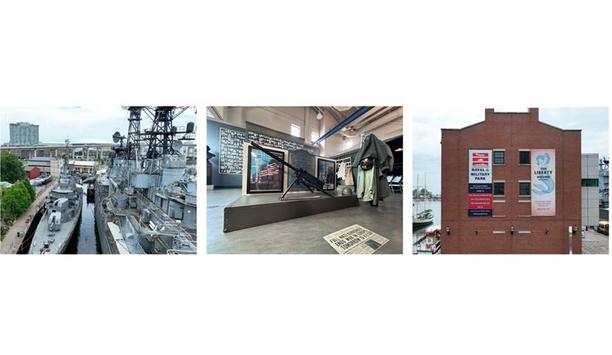
The Buffalo and Erie County Naval & Military Park, in Buffalo, N.Y., has a clear mission based on four pillars: to honour all veterans, educate the public about the sacrifices made by those who serve, inspire a sense of patriotism and appreciation for those protecting Americans’ rights and freedoms, and preserve the artifacts entrusted to the Park’s care. Buffalo Park The Park regularly hosts events and takes visitors inside America’s military history with in-depth tours of decommissioned naval vessels, exhibits, and displays. The team’s goal is to highlight its monuments and artifacts while providing a welcoming and secure environment for visitors. A key challenge was the Park’s large open and unfenced grounds, allowing the public access to the facilities at any time of the day or night. Challenge Provide a welcoming and secure environment for visitors and deter criminal activity within the park. Achieve 360° coverage across all interior and exterior areas without using cables, which would have made the project cost-prohibitive. Design a wireless surveillance system to cover the park’s large areas of open ground. Surveillance system installation “We had begun to notice an increased rate of delinquent incidents happening during the day and off hours, including graffiti placed on the artifacts and monuments,” said Paul Marzello, Sr., President & CEO, Buffalo and Erie County Naval & Military Park. The Park engaged Mario Rodriguez, president of Forseti Protection Group, and Erik Schiefer, account executive at Seibold Security, to design and install a surveillance system based on Hanwha Vision’s multi-directional and AI-equipped cameras. “When we did our research, we found that Hanwha Vision certainly was a pioneer in the industry,” said Marzello. Factors to consider From a risk and public safety perspective, the goal from the start was to maintain an open and welcoming environment “We conducted a site survey, considering the line of sight, the cameras’ capabilities, the density of groups of visitors and where they tend to gravitate, and criminal history in the Park,” said Bill Abbott, Director of Operations, Buffalo and Erie County Naval & Military Park. “Those were all factors in how we determined the layout. We wanted to make sure that we had the right coverage.” From a risk and public safety perspective, the goal from the start was maintaining an open and welcoming environment while keeping public safety top-of-mind. Solution Install a Hanwha Vision surveillance system comprising multidirectional and AI cameras. 4K multi-sensor cameras Schiefer has extensive experience with Hanwha cameras from previous projects. “Their new 4K multi-sensor cameras are first class and as far as 360° coverage, with the ability to monitor several areas, Hanwha was the first choice,” he said. The ability to view 360° coverage from one camera that essentially is divided into multiple sectors was significant. “That gives us full visibility and lets us be open and welcoming while keeping out of the public’s way without being imposing or intimidating,” Rodriguez said. Ease of playback Schiefer added that one key benefit of using the Hanwha 360° cameras to cover such a large area Schiefer added that one key benefit of using the Hanwha 360° cameras to cover such a large area is the ease of playing back footage and monitoring activity after the fact. “They are broken out into four sensors, so you don’t necessarily have to go back and look through a large amount of footage,” he said. “You can pick the area you're looking for, go directly to that sensor within the camera that we have in that area, and you can pull footage much easier that way.” Cable cost and distance One challenge the team encountered during the design phase was running a cable for a project of this scale. “The cost to run buried cable at such long distances with switches would have rendered this project almost completely impossible,” Schiefer said. “We incorporated wireless network cards into the poles around the park and all the cameras feed directly back to the Hanwha NVR without using any sort of cabling.” NDAA compliant solutions The Park’s priorities included the use of National Defense Authorization Act (NDAA) compliant solutions and having more streamlined communication with law enforcement. “We wanted to make sure that the cameras themselves were secure,” said Abbott. “The cameras also needed to be used to positively identify someone who had done something, either damage or acts of violence. In the past, we could not effectively supply law enforcement with usable information to identify a suspect." Use of AI in cameras The Hanwha cameras’ use of AI plays a key role in delivering those capabilities "We've now changed that with the quality of cameras that we're using. We can share footage and data to produce an outcome that's satisfying to everybody as far as finding a culprit and holding them accountable." The Hanwha cameras’ use of AI plays a key role in delivering those capabilities. “You can use key identifiers, whether it's the colour of someone's shirt, if they're wearing a backpack, or there's some physical feature that we can then go through and locate that person through the system,” Abbott said. Sense of security “We absolutely would see an increase in the value and number of cameras that we use,” said Abbott. Marzello added, “From an operations standpoint, we feel a greater sense of security knowing the cameras are there and will help us identify activities that we can hopefully prevent. This system meets our needs today and will also be able to grow with us.” Results Ability to effectively monitor all park areas and more effective forensic searches. Reduction in on-premise incidents. Streamlined collaboration with law enforcement agencies.




Global Security Exchange (GSX) 2026 news

ONVIF®, whose open standards make IP-based physical security products interoperable worldwide, announces the Release Candidate for the ONVIF Media Signing Add-on, a standardised method for confirm...

HID, a pioneer in trusted identity solutions, announces new enhancements that help organisations fast-track their mobile access adoption as part of their broader digital transformation. Introduced ahe...

Showcasing the power of partnerships, barox and Gallagher will highlight their joint value proposition at GSX, booth #3433, 14-16 September, Georgia World Congress Center, Atlanta. Revealing seamless...

Securitas Technology, one of the world’s largest electronic security companies, will highlight the technologies, trends and innovations shaping the future of physical security at Global Security...

Nice and its HySecurity division will demonstrate the StrongArm® M30 crash-rated vehicle barrier at GSX (Global Security Exchange) 2026, September 14–16, at the Georgia World Congress Center...

At GSX 2026 (booth #2532), Genetec Inc., the global pioneer in enterprise physical security software, will showcase the latest enhancements to its portfolio, designed to help organisations modernise s...

ASIS International, the world’s largest association for security management professionals, has announced its programming lineup for Global Security Exchange (GSX) 2026 with in-person and digital...
Building on the success of Global Security Exchange (GSX) 2025, which welcomed participants from 95 countries, GSX 2026 is set to deliver another exceptional lineup of thought leadership and innovatio...

ASIS International, the world's largest association for security management professionals, is pleased to announce the opening of its Call for Proposals for the Global Security Exchange (GSX) ...
Security Essen 2026 news

Security requirements for critical infrastructure are changing rapidly. Recent events, such as the discovery of a drone at Leipzig Airport, have once again demonstrated how quickly modern technologies...

Gunnebo Safe Storage is returning to Security Essen, to showcase how secure storage, connected locking technologies and cyber resilience are converging to shape the future of physical security. On st...

The UK-based Keynetics will exhibit at Security Essen for the first time, showcasing SentriGuard, its smart key-management solution for controlled, auditable access to physical keys. On Keynetics&rsq...

At the trade fair Security Essen 2026, WAGNER Deutschland GmbH will present innovative solutions for technical fire protection from September 22 to 25. The focus of the company’s exhibition in H...

The security industry is positioning itself: months ahead of the event, Security Essen 2026 is already seeing strong demand from companies and a correspondingly high level of exhibitor participation....
